Deciding when the plan goes wrong
Use PAVE to separate risk from pressure, then review the outcome after the decision
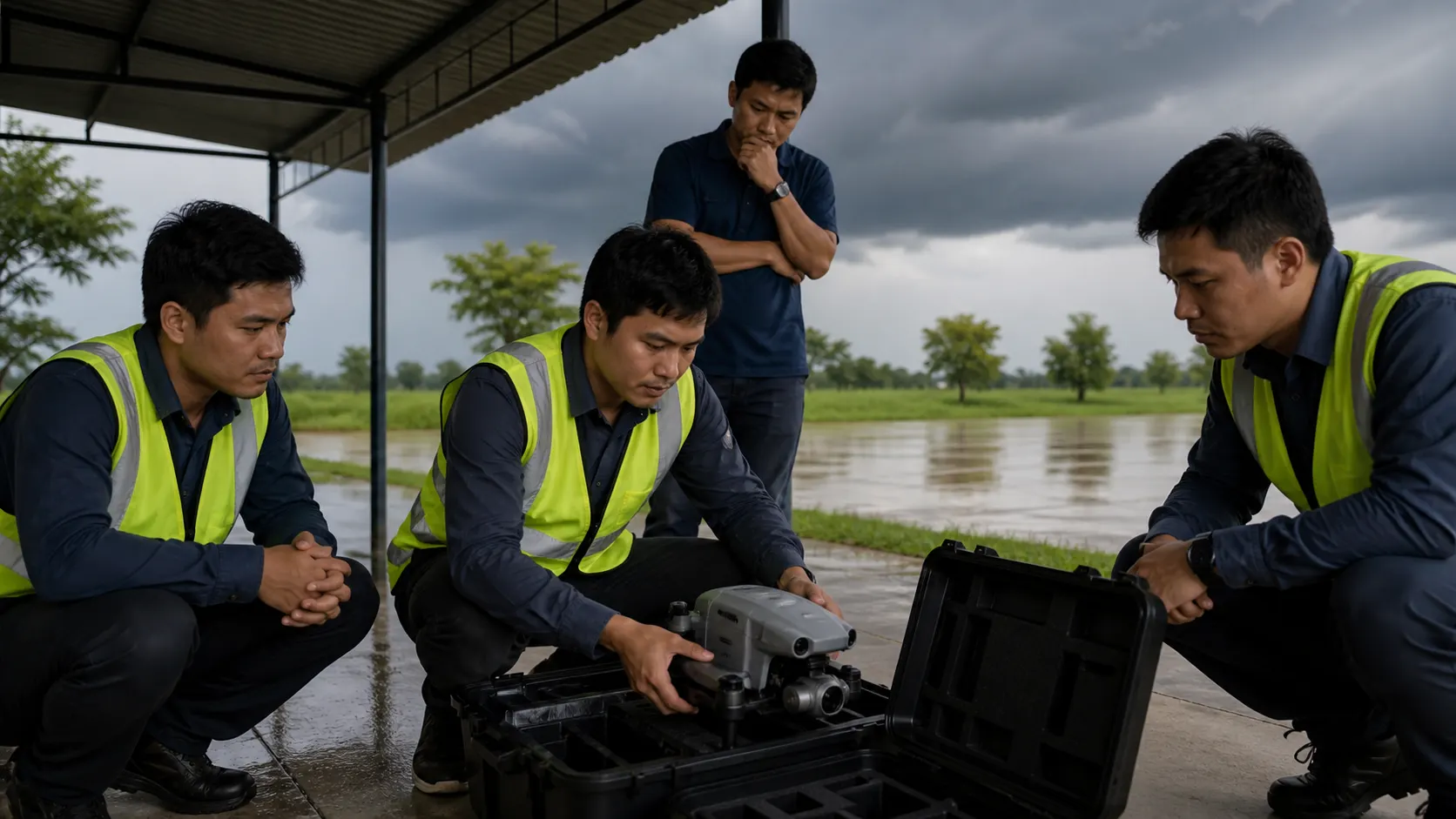
Separate information from the desire to get the job done
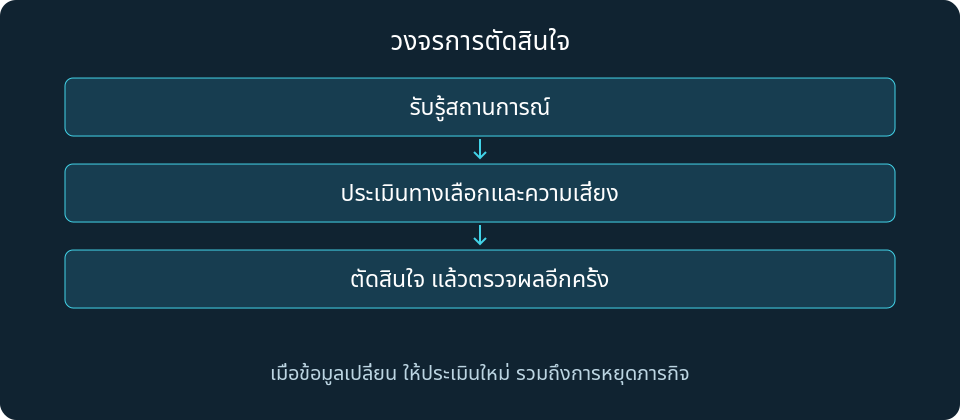
Having invested in travelling to the site, or facing a deadline, does not make the aircraft, the people or the weather any more ready. Start by writing down what is known, what is not yet known, and which constraints have changed, before choosing to continue, adjust the plan, or stop.
PAVE helps you look at all four sides
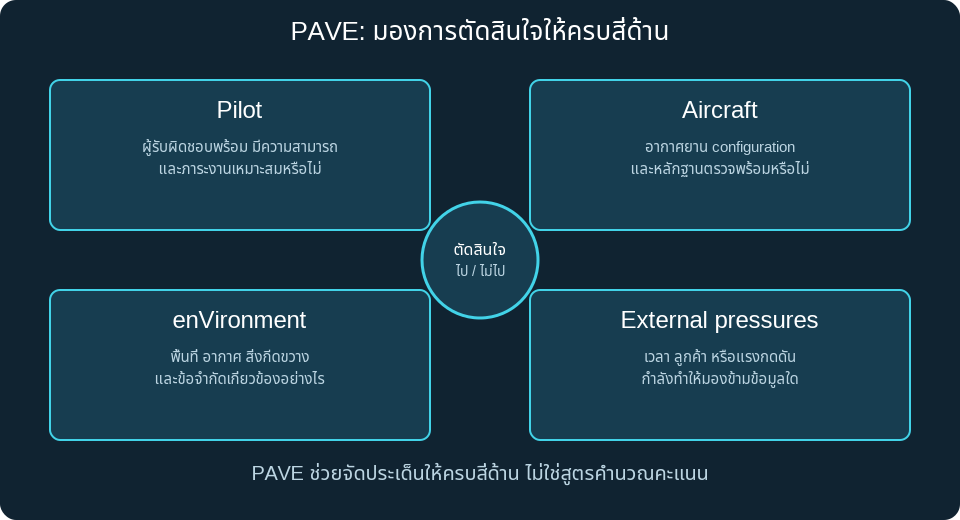
| Aspect | Questions for drone operations |
|---|---|
| Pilot | Is the responsible person ready, with suitable competence and workload? |
| Aircraft | Are the aircraft configuration and inspection evidence ready? |
| enVironment | How are the area, weather, obstacles and constraints relevant? |
| External pressures | Which information are time, the client or other pressures causing you to overlook? |
PAVE is a tool for organising issues, not a formula for using scores from favourable aspects to offset important constraints, and completing a checklist is not the same as meeting every requirement.
An example of a reviewable decision
Hypothetical scenario: the team is ready, but the weather has changed and the trend at the work site is unknown. Identify what information is missing, who can check further, and what options exist to postpone or change the scope. If the check cannot be completed within the predefined conditions, apply the planned stop criteria; do not choose an answer under pressure.
Record the options, the reasoning, the decision maker and the point at which the situation will be reassessed. After the decision, you still need to monitor whether the measures are working; if the situation changes, reopen the assessment.
Run a simulated scenario and debrief →
References and scope
Sources checked 7 September B.E. 2569 (2026). Compiled to accompany knowledge kindly provided by DTI. FAA guidance is used to support the underlying principles and does not replace Thai requirements.
Connecting knowledge to missions and data
A good decision must state the information available, the information missing, and the reasons for the choice. If key evidence is not yet ready, postponing or terminating the work is a decision outcome that must be recorded just like proceeding. Read the reference: CAAT, Guidance for Development of an Operations Manual
Check your understanding: Compare starting, postponing and terminating the work in a single scenario, then identify the new information that would change your answer
Read more Lessons that apply this knowledge in simulated work · Sources reviewed 26 September B.E. 2569 (2026)