Remote pilot readiness
Observe fatigue, stress, health, and workload before deciding to take on a duty

Readiness can change during the day
Knowing the procedures and handling the equipment fluently does not make you ready at all times. Fatigue, insufficient rest, illness, medication or substances that affect performance, and pressure can change your ability to keep track of the situation. Assess before starting work and whenever working conditions change.
Use IMSAFE as a reminder checklist
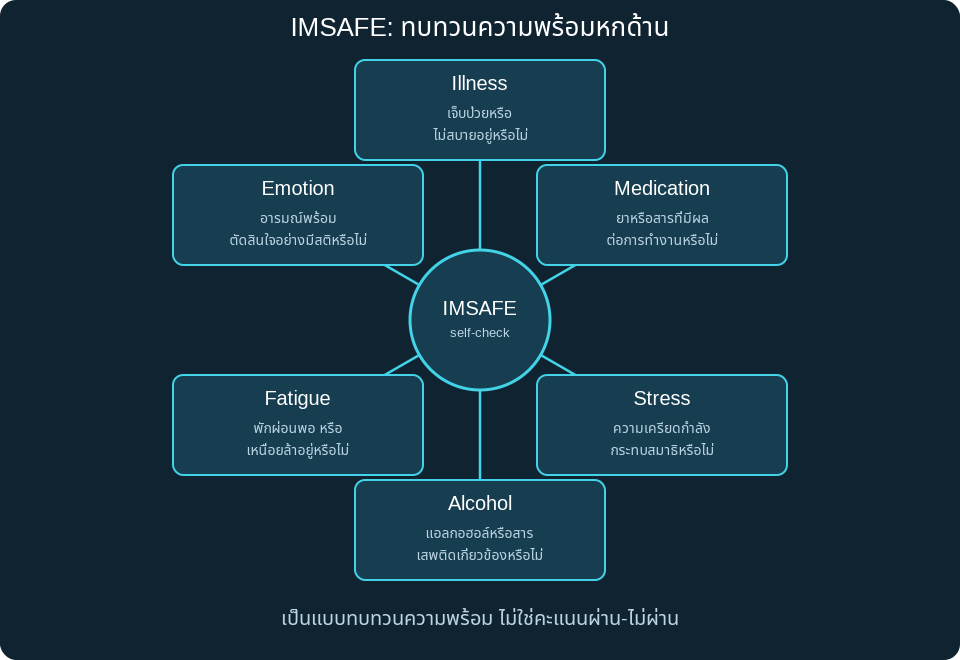
IMSAFE in FAA guidance helps review Illness, Medication, Stress, Alcohol, Fatigue, and Emotion. Its purpose is to reveal issues that might be overlooked, not to compute a score that certifies you are fit to fly. Explanations of the acronym may differ between sources, so state clearly which source you use.
| Signs during work | Team response |
|---|---|
| Skipping steps or unable to recall the latest information | Pause to review the status and reassign tasks |
| Frequent miscommunication or workload beyond capacity | Reduce concurrent tasks and use read-back |
| Unsure whether physical condition or medication has an effect | Do not guess your readiness; seek advice from an appropriate person before taking on the duty |
Plan rest before fatigue sets in
Arrange rest breaks, drinking water, the working environment, and replacement staff to suit the job. Do not use the number of rest hours or a nap from one example to guarantee how long you can keep working; readiness must be reassessed according to the situation.
Exercise: a remote pilot reports insufficient rest, but the client has set a delivery deadline. Write a plan to change personnel, postpone the job, or adjust the scope, without using urgency as evidence that the risk has decreased.
References and scope
Sources checked on 7 September 2026 (B.E. 2569); compiled alongside the knowledge base kindly provided by DTI. FAA guidance is used to support the principles and does not replace Thai requirements.
Linking knowledge to missions and data
Readiness is information that must be reviewed when working conditions change. Learners should be willing to state fatigue, workload, or skills that are not yet ready, and propose reducing the workload, changing the responsible person, or postponing the job. Read the reference: CAAT, Guidance for Development of an Operations Manual
Check your understanding: given a scenario of little sleep and having to read data from several screens at once, write what should be reported to the team and the conditions under which you will not start work
Read more Lessons that apply this knowledge in simulated work · sources reviewed 26 September 2026 (B.E. 2569)