Fundamentals of drone light shows
Separate formation, trajectory, timing and light colour, and check the picture from the audience's viewpoint before designing a show
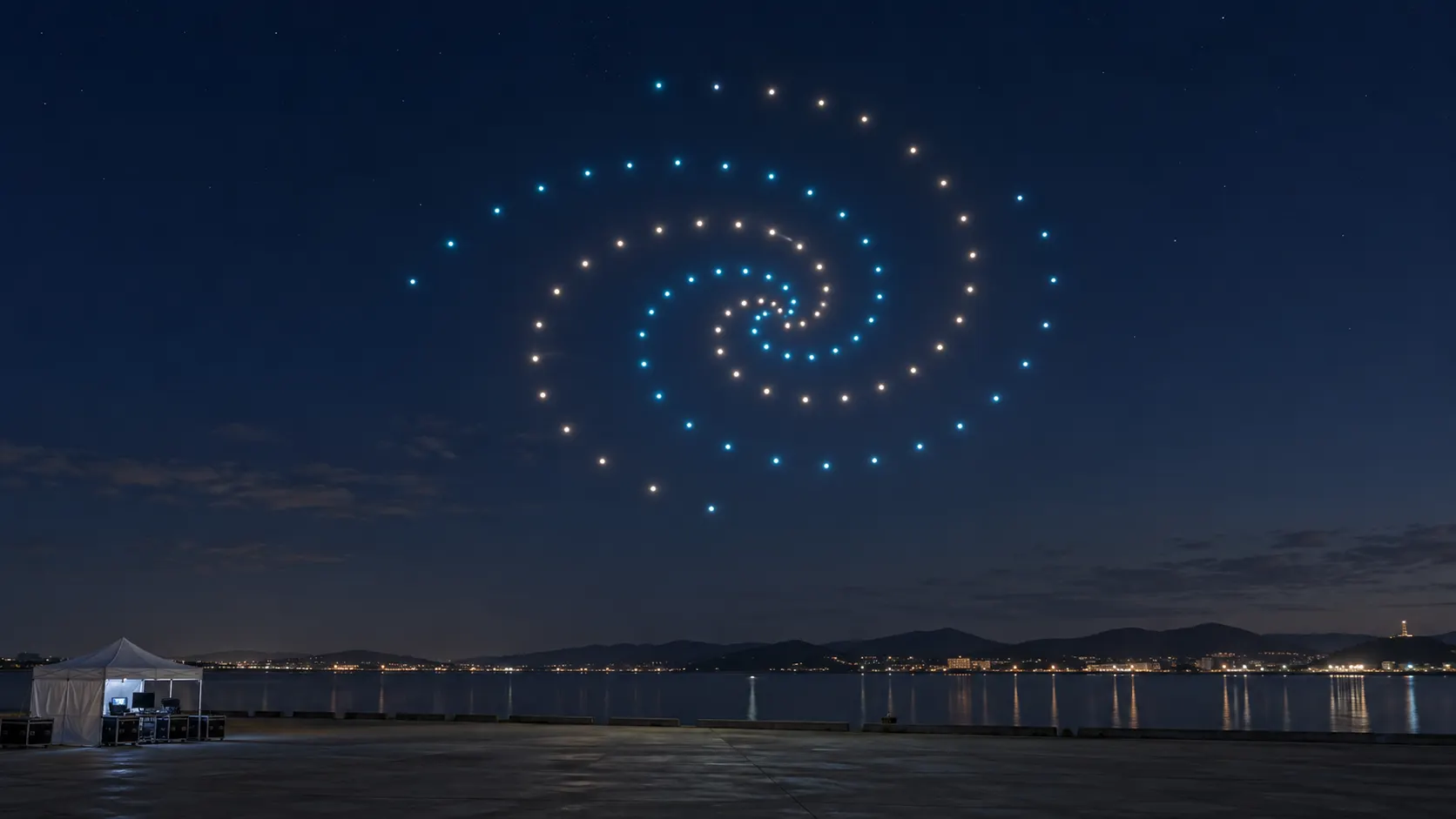
A show consists of four parts
The formation says where the points are, the trajectory says how each point travels, timing keeps every aircraft synchronised, and the lights set the colour or brightness in each phase. Start designing with a small number of aircraft and simple shapes so errors can be read in time, before adding complexity
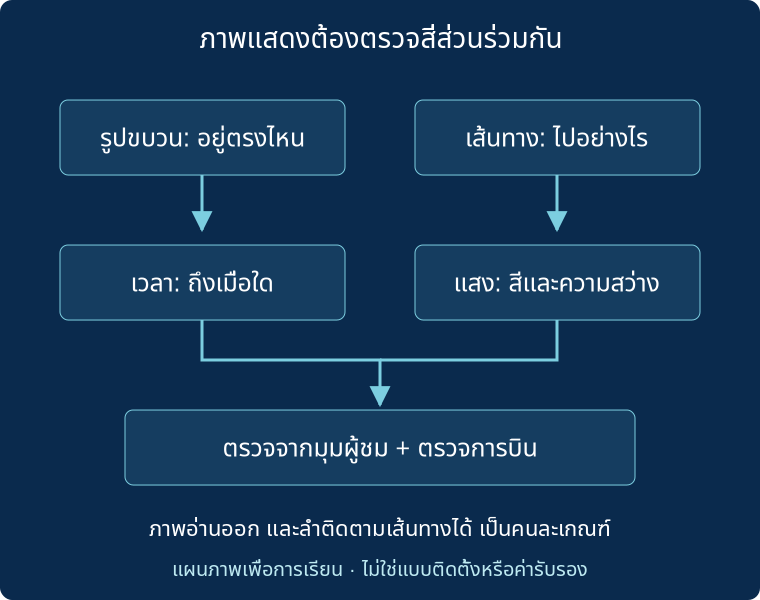
Lay out a storyboard before choosing the number of aircraft
| Phase | What is planned | What must be checked |
|---|---|---|
| Preparation and take-off | Start positions and order | Climb paths do not conflict |
| Enter the first formation | End points and arrival times | Speed/acceleration and separation along the way |
| Hold the formation | Duration, colour and viewing angle | Can the audience read the shape? |
| Change formation | Aircraft assignment and transition | Check the whole phase, not only the end state |
| Return and land | Landing points and reserve time | Energy and the area used |
This table is a framework for classroom activities, not a standard for real events. Download the storyboard form to fill in on a computer
The audience's viewpoint changes the meaning of a shape
A shape that reads clearly from a front camera may overlap when seen from the side. Set up at least a front and a side view, then compare the silhouettes before turning on the light colours. For Thai characters, check the vowels and tone marks with someone who knows the language, both before and after converting them into lines or points. Do not treat a nice-looking font preview as evidence that all the points are present
Skybrush Studio is a tool for designing storyboards, formations and lighting in Blender; it can check constraints and export trajectories for further review, but learners must still state the type of model and the scope they have checked themselves
Exercise: reading the picture versus reading the flight results
On a computer, design a ring that transforms into a curve, choosing the timing and number of points according to the tool used. Present views from two angles with an explanation of what disappears when some points are turned off. The criterion is being able to explain how the viewpoint affects the result and to separate shape-readability problems from trajectory-following problems
Having many aircraft does not necessarily require decentralised decision-making. Read Swarms and communication networks to separate the role of the network from show planning, then continue to From text to trajectories
Bibliography and original sources
Documents checked 23 September B.E. 2569 (2026)