Writing risks and deciding as a team
Practise separating causes, events and consequences, set controls that have owners, and make decisions when the situation changes.
G02 · 60-minute core lesson · practice on a computer
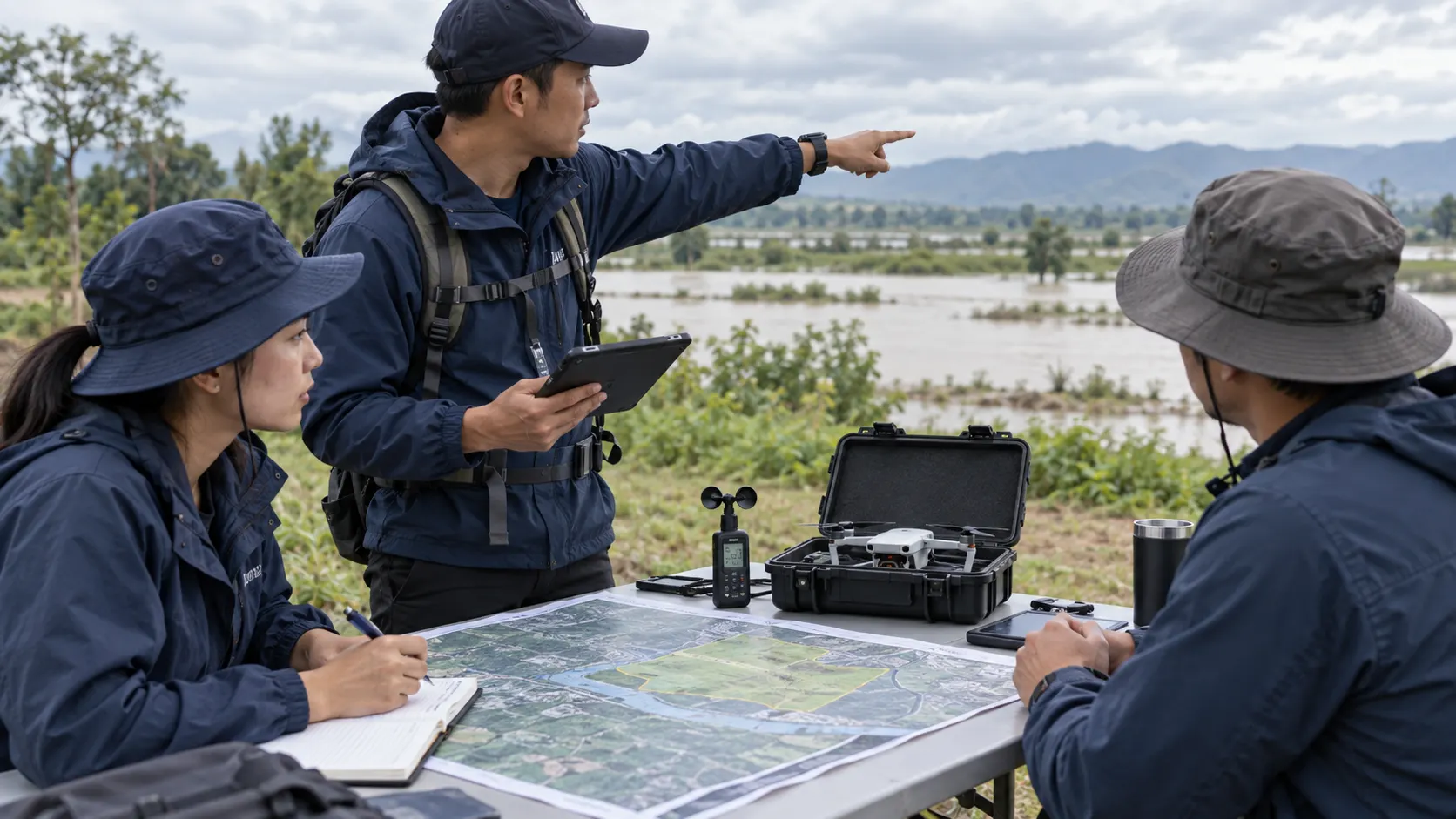
Practise separating causes, events and consequences, set controls that have owners, and make decisions when the situation changes.
Goals and preparation
Core lesson G02 takes 60 minutes: 15 minutes of principles, 25 minutes of register practice, 10 minutes of injects and 10 minutes of review. It can be done individually or in groups of 2–3. Prepare the G02-risks.csv and G02-decisions.csv The goal is at least 3 risks, each with a control owner and review conditions.
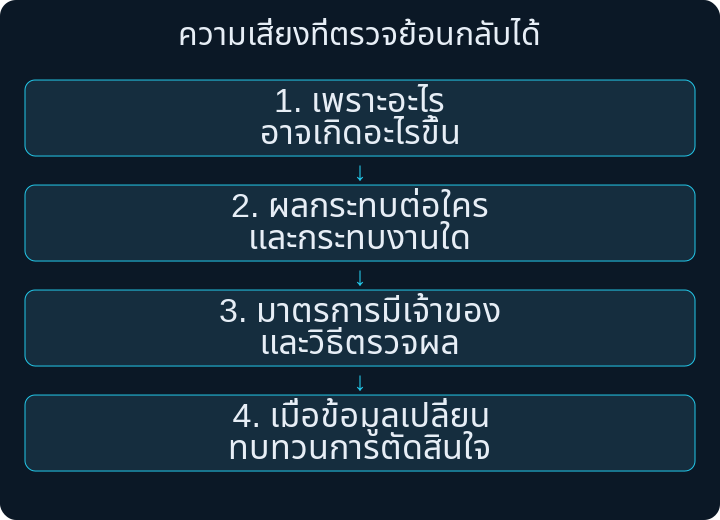
Do not just write 'high risk'
Use the sentence 'Because… … may occur, resulting in…'. For example: because the team is using different versions of the map file, work may be delivered for the wrong area, resulting in data users making decisions based on data that does not match the mission. What starts the problem is the cause, the event is the abnormal thing that may occur, and the consequence is the damage that follows.
A control must answer who does what, by when, and how it is checked 'Be very careful' cannot be checked, but 'The coordinator reads back the area code and map version with the recipient before the activity starts, then records the confirmation' can be checked.
Setting controls does not reduce the risk to zero. If the file is still unclear or the person who must check it is unavailable, state the residual risk and the conditions for pausing work. Do not lower the risk score yourself merely because you have written a control.
Practice case and injects
A hypothetical team with a coordinator, an operator and a reviewer is preparing a survey plan on a computer to send damage imagery to the planning unit. No real drone power source is connected and there is no flying in this lesson.
- Read the case in the
G02-risks.csvand fill in the causes, events and consequences for different file versions, pressure to deliver quickly and communication breakdowns. - Choose one control that prevents the event and another that helps limit the consequences if the event occurs. Assign an owner as a role; do not use real people's names.
- Read the controls back in your own words to the person assigning the work, then record whether they match. Simply receiving the message 'acknowledged' does not show that the details are understood in the same way.
- Open the inject: 'The coordinator reports that the coordinates in the worksheet do not match the map, and the source document checker cannot yet be reached, but only 20 minutes remain before the deadline.' Choose which part to pause, which part can continue, and what evidence must be obtained before restarting.
- Record the decision time, known information, the person responsible, the reasons and the review point in the
G02-decisions.csv
The answer does not need to stop every part of the work. Learners may continue formatting the report or preparing the checklist, but should not draw conclusions about the area from conflicting data and deliver them as confirmed information.
Work assessment criteria
Score separating cause/event/consequence 30, controls and owners 30, response to the inject 25, and traceable records 15. The target is 75/100, and conflicting coordinates must not be concealed in order to meet the deadline.
Afterwards, ask which information changed the decision and which tasks the team understood differently. Revise the register based on what was found, rather than only recording the lesson 'must be more careful'.
Further reading and bibliography
- Coordination of disaster missions
- ICAO. (n.d.). Safety Management Manual: Chapter 9. Uses the concepts of hazard/risk management and monitoring the effectiveness of controls, without adopting the scoring table as a rule for every team.
- CDC. (2025). Quality Training Standards. Supports practice with feedback and links outcomes to activities.
Accessed 8 September B.E. 2569 (2026). The case, inject and rubric were designed by PK-Research as a tabletop exercise, not a flight plan test or a certification of field readiness.