Forming the team and incident-coordination SOPs
A request to “send a drone to take a look” is not clear enough. You need to know what decision the data user will make, when they need it, and who assigns the task. Reading back helps reduce errors in location, time and type of output.
P01 · Practice lesson and case study
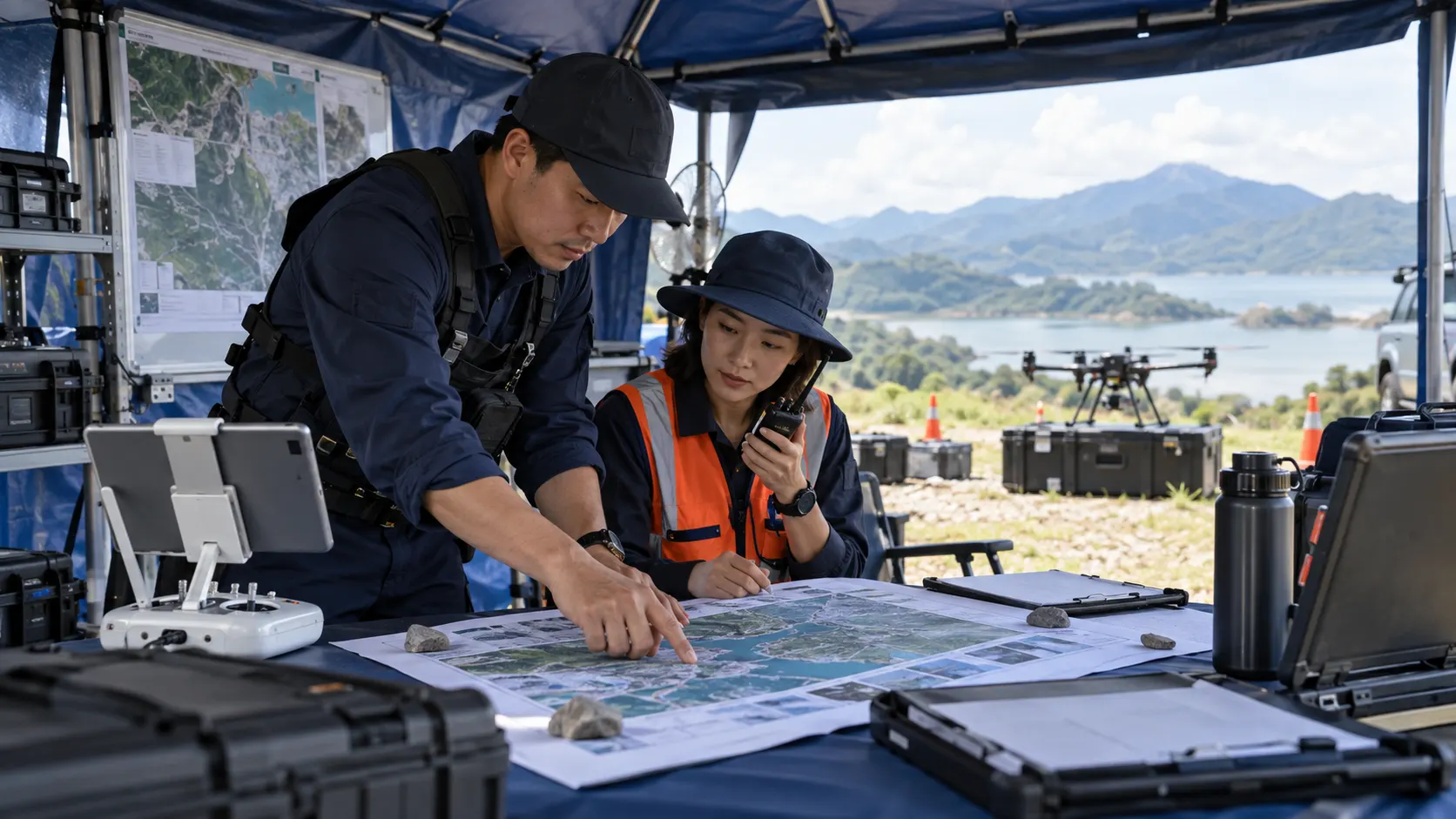
A request to “send a drone to take a look” is not clear enough. You need to know what decision the data user will make, when they need it, and who assigns the task. Reading back helps reduce errors in location, time and type of output.
Before you start
Use a Windows or Linux computer, read CSV files with a spreadsheet program or text editor, and save your own working files separately from the originals. The basic Python kit uses the standard library; actual AI programs and simulators have separate installation steps.
- Law and roles →
- Risk and teamwork →
- Governance and the data lifecycle →
- Systems and operational evidence →
By the end of this lesson
- Turn a request into a mission with a tasking authority, a data recipient and stop conditions
- Deliver briefings and status reports that recipients understand the same way
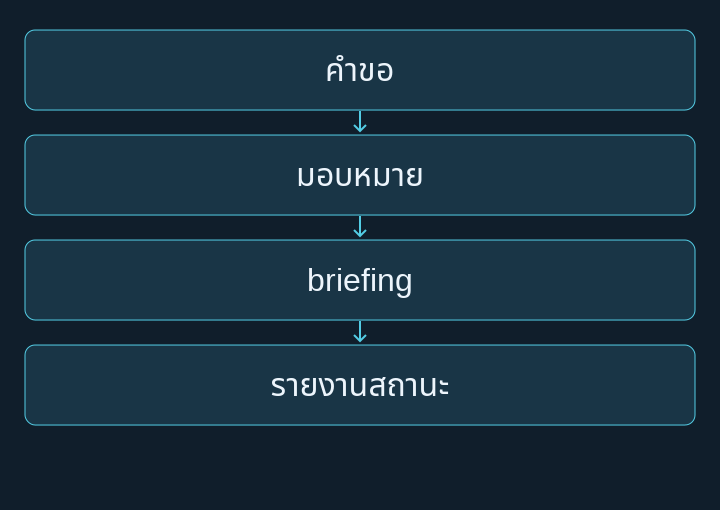
Task and hands-on steps
A training center requests imagery of the access route to a hypothetical school, but the ground team sends the name of a different pickup point. The request does not specify the data recipient or the update time.
Extract the ZIP, then open P01-guide.md and P01-worksheet.csv . Keep assumptions and verified results separate. A blank in the worksheet means data still needs to be collected, not that it has passed.
- Complete the mission request with the tasking authority, output recipient, scope, time and data controller
- Read back the location and place name with the requester; do not pick from a similar-sounding name yourself
- Assign the roles of coordinator, operator, data checker and the person who decides to stop
- Practice reporting task accepted / checking / delivered / terminated, and record who confirmed understanding
Deliverables and assessment criteria
Submit: mission request and SOP
Key criteria: Tasking authority, recipient, data controller and termination conditions are all specified; understanding has been confirmed
Attach files that can be opened and checked, with dates, data versions and reasons where no conclusion can yet be drawn. Completing the worksheet does not replace actual test results with models or equipment, or a real skills assessment.
Show the suggested answer after completing the worksheet
The request still needs the location and data recipient confirmed before assignment. A read-back must obtain confirmation from the other party, not just the sender rereading it alone.
Activity plan for instructors
The advanced level adds two requests competing for the same resources; prioritise them by the outputs the recipients need and report the constraints back.
Review question: Who uses the output, and whom do you report back to when the data is insufficient?
| Learning set | Explain | Practice | Assess | Including equipment stations |
|---|---|---|---|---|
| Public Safety, foundation level | 45 minutes | 105 minutes | 30 minutes | 0 minutes |
| Public Safety, advanced level | 30 minutes | 75 minutes | 15 minutes | 0 minutes |
Equipment-station time is part of the total time in the plan and is not added again. Instructors separate PC results from observed tasks and have each learner explain their own work before revealing the suggested answer.
See the full-track activity plan and foundation extensions →Bibliography and scope of citation
Additional sources checked 9 September 2569 (2026). Hypothetical cases, figures, worksheets and activity criteria were newly written by PK-Research.
- FAA, Public Safety Toolkit
Studied for project organisation and coordination; US rules are not used in place of Thai rules
- ICAO, Safety Management Manual, Chapter 9
Used as a framework for risk management and monitoring, without replacing Thai requirements